
Estimated reading time: 7 minutes
When you’re parenting a child who melts down at the smallest thing, seems “stuck on high alert,” or just can’t calm their body or mind, it can feel exhausting. The good news is—there’s a reason behind those big reactions.
They’re not being defiant or dramatic; their nervous system is dysregulated.
Understanding what a regulated nervous system is—and how to help your child achieve it—can transform your family life from chaos to calm. In this post, you’ll learn what regulation really means, how to spot dysregulation, and the daily strategies that help your child feel safe, focused, and emotionally balanced again.
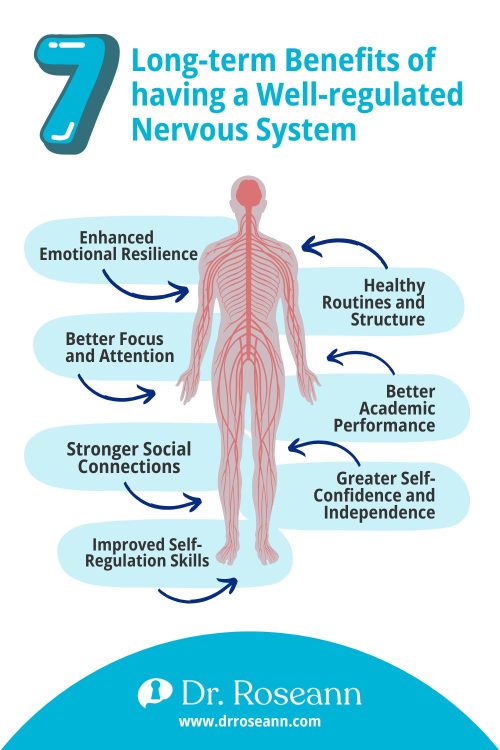
What Does It Mean to Have a Regulated Nervous System?
A regulated nervous system is a balanced one. It means your child’s brain and body can handle stress, recover from challenges, and stay flexible instead of reactive.
When regulated, the autonomic nervous system (ANS)—the body’s control center—moves smoothly between the sympathetic (“fight or flight”) and parasympathetic (“rest and digest”) states.
|
Regulated Nervous System |
Dysregulated Nervous System |
|
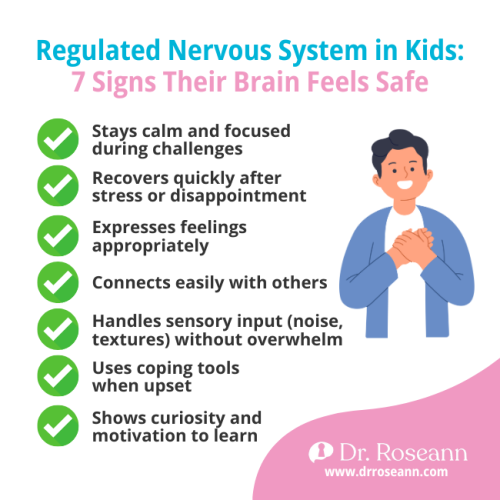
Calm, alert, and focused |
Anxious, agitated, or shut down |
|
Able to recover from stress |
Stuck in fight, flight, or freeze |
|
Emotionally aware and expressive |
Emotional outbursts or withdrawal |
|
Open to learning and connection |
Easily overwhelmed by tasks or noise |
|
Uses coping tools effectively |
Struggles to self-soothe or reset |
When your child’s brain feels safe, it can think, learn, and connect. That’s why I always say, “Calm the brain first—everything follows.”
How Do I Know if My Child Has a Dysregulated Nervous System?
A dysregulated child isn’t “bad” or “lazy.” Their nervous system is simply overwhelmed.
Here’s what that may look like:
- Overstimulation: frequent meltdowns, irritability, impulsivity, or sensory sensitivities (like hating loud noises or clothing tags).
- Understimulation: zoning out, sluggishness, low motivation, or appearing “spacey.”
One mom I worked with, Melissa, described her 9-year-old as being “on a rollercoaster.” Some days he was bouncing off the walls; others, he’d shut down completely. Once we focused on regulating his nervous system—through structured routines, sensory breaks, and co-regulation—he started to find his balance again.
What Happens in the Brain When Kids Are Dysregulated?
When a child’s nervous system is dysregulated, the stress response takes over. The amygdala (the brain’s alarm system) becomes overactive, while the prefrontal cortex—the part responsible for reasoning, planning, and self-control—goes offline.
This means your child literally can’t “think their way” out of a meltdown.
Recent research from the Yale Child Study Center (2023) found that children with chronic stress or trauma histories show reduced connectivity between the amygdala and prefrontal cortex, which directly affects emotional control and focus. In other words, calming the nervous system is not optional—it’s essential for emotional regulation and learning.
How Can Parents Help a Dysregulated Child Achieve a Regulated Nervous System?
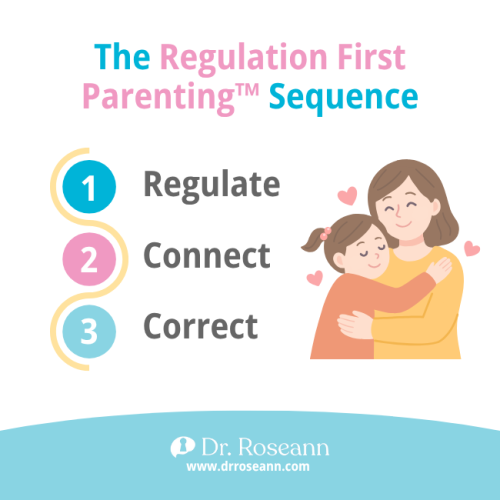
The foundation of Regulation First Parenting™ is simple but powerful:
Regulate → Connect → Correct.
1. Start With Regulation
Before addressing behavior, calm the brain. You can’t teach or discipline a dysregulated child—because their brain isn’t ready to receive information.
Try:
- Deep belly breathing together
- Gentle rhythmic movement (rocking, swinging, walking)
- Soft sensory input (weighted blanket, calming music)
Read more about: What Is Self-Regulation?
2. Build Connection
Once calm, create emotional safety.
Eye contact, empathy, and validation (“I see you’re frustrated”) activate the parasympathetic nervous system, helping your child feel safe enough to learn and reflect.
3. Then Correct
Only after regulation and connection can correction—like teaching problem-solving or new coping tools—stick.
What Daily Habits Support a Regulated Nervous System?
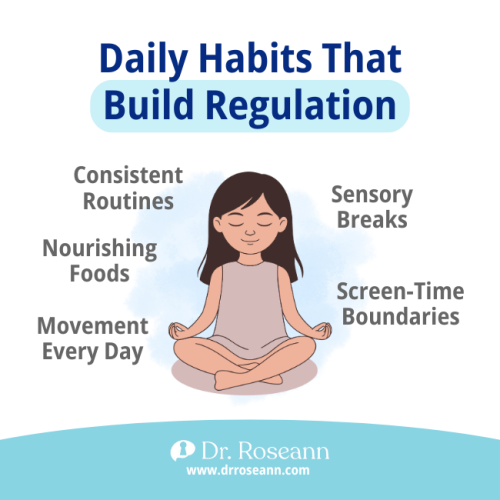
Creating a regulated nervous system isn’t a one-time fix—it’s a lifestyle. These daily habits help your child’s brain stay balanced:
1. Consistent Routines
Predictability builds safety. Regular meal, sleep, and homework times keep the nervous system stable.
2. Nourishing Foods
A diet rich in omega-3s, leafy greens, and protein helps support neurotransmitter function and reduce inflammation.
3. Movement Every Day
Physical activity releases tension and promotes dopamine and serotonin—key mood stabilizers.
4. Sensory Breaks
Simple tools like fidget toys, stretching, or swinging help reset the brain between tasks.
5. Screen-Time Boundaries
Too much fast-paced screen input overstimulates the nervous system. Build in digital “cool-down” time before bed.
One dad, Rafael, began doing “evening resets” with his son—a quiet walk and a short breathing routine before bedtime. Within weeks, meltdowns decreased and sleep improved.
Brain Science Spotlight: The Power of Co-Regulation
Recent research from Harvard’s Center on the Developing Child (2022) found that children’s physiological regulation improves significantly when caregivers model calm behavior.
When a parent slows their breathing and uses a steady tone, the child’s heart rate and stress hormones begin to synchronize—a process called co-regulation.
What this means for your family: Your calm literally rewires your child’s brain toward balance.
Try this today: when your child is upset, pause, breathe slowly, and say softly, “Let’s find calm together.”
Dr. Roseann’s Therapist Tip
In my 30+ years of clinical practice, I’ve learned that no real change happens until the nervous system is calm.
Try this today: Add one “mini-reset” moment into your child’s day—like two minutes of deep breathing before school or quiet rocking before bed.
Why it works: These micro-regulation moments lower stress hormones and train the brain to return to safety faster.
Remember: small moments of calm repeated daily lead to lasting regulation.
The Path Toward a Regulated Nervous System
Helping your dysregulated child achieve a regulated nervous system is the key to lasting emotional resilience, focus, and confidence.
When you regulate first, everything else—connection, learning, behavior—begins to fall into place.
Download my free guide, 147 Therapist-Endorsed Self-Regulation Strategies for Children, to start bringing calm and structure into your child’s day.
FAQs
What causes nervous system dysregulation in children?
Chronic stress, trauma, neuroinflammation, sensory overload, and poor sleep or diet can all keep a child’s nervous system stuck in “survival mode.”
How can I tell if my child’s nervous system is regulated?
Regulated kids recover from stress, manage emotions, and show curiosity and flexibility. They don’t avoid challenges—they bounce back from them.
Can therapy or medication help regulate the nervous system?
They can support the process, but regulation must come first. Body-based tools—like neurofeedback, sensory activities, or co-regulation—help the brain calm enough for therapy to be effective.
How long does it take for a child to achieve regulation?
Every child’s timeline is different, but with consistent, brain-based support, parents often notice positive shifts within weeks.
What can parents do right now?
Model calm, create predictable routines, and use daily sensory and breathing resets. You’re teaching your child’s brain what safety feels like.
Citations
Center on the Developing Child at Harvard University. (2022). The Science of Co-Regulation: Helping Young Children Learn to Manage Stress.
Yale Child Study Center. (2023). Connectivity Between Amygdala and Prefrontal Cortex in Emotional Regulation in Children.
Porges, S. W. (2021). Polyvagal Theory: The Transformative Power of Feeling Safe. W.W. Norton.
McLaughlin, K. A., Sheridan, M. A., & Lambert, H. K. (2022). Childhood adversity and neural development: Mechanisms of stress adaptation. Development and Psychopathology, 34(2), 497-512. https://doi.org/10.1017/S0954579420001515
Siegel, D. J., & Payne Bryson, T. (2021). The Power of Showing Up: How Parental Presence Shapes Who Our Kids Become. Ballantine Books.
Always remember… “Calm Brain, Happy Family™”
Disclaimer: This article is not intended to give health advice and it is recommended to consult with a physician before beginning any new wellness regime. *The effectiveness of diagnosis and treatment vary by patient and condition. Dr. Roseann Capanna-Hodge, LLC does not guarantee certain results.
Are you looking for SOLUTIONS for your struggling child or teen?
Dr. Roseann and her team are all about science-backed solutions, so you are in the right place!
© Roseann Capanna-Hodge