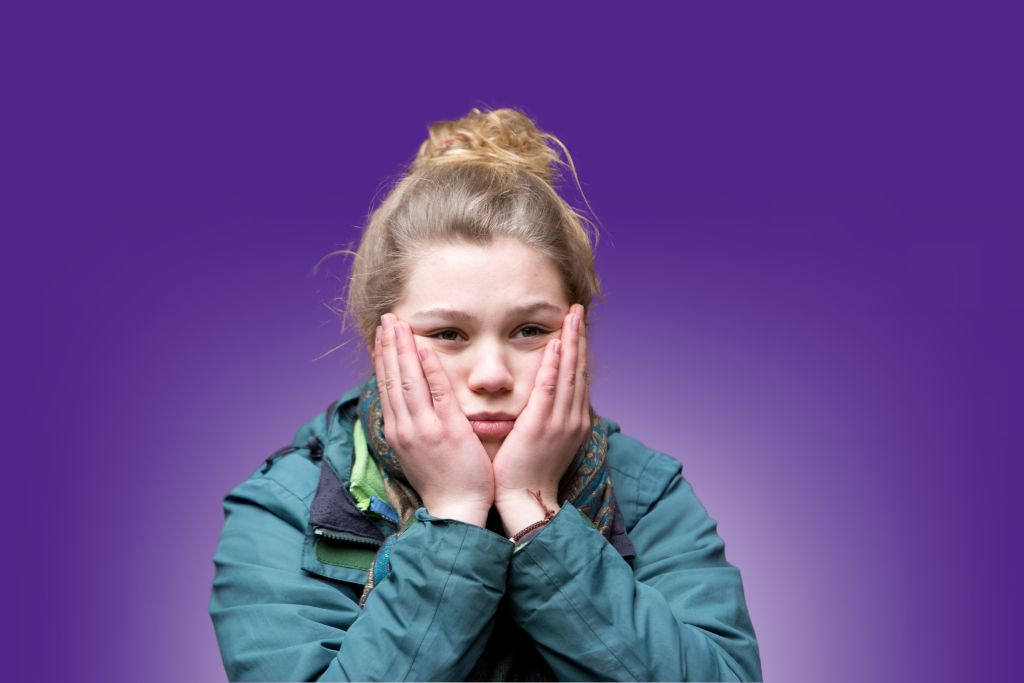





You’re not a bad parent if your child swears. You’re a caring parent trying to decode a dysregulated brain.
This episode breaks down why kids use strong language and how to redirect it—without shaming, power struggles, or giving up.
You’ll learn how to stop swearing by calming the brain first, building connections, and then teaching better words and coping—Regulate. Connect. Correct.™
Why does my child swear when they’re upset?
Swearing is often a stress signal, not defiance. When the nervous system is overwhelmed, kids reach for fast, big words to match big feelings. It’s a pressure valve, not a moral failing.
Try this:
- Name the state, not the word: “Your brain is in high gear. Let’s breathe, then talk.”
- Co-regulate first: Soften your tone, lower your volume, slow your breathing.
- Offer a swap: “Say ‘I’m maxed out!’ or ‘I need space!’ instead of that word.”
Example: After a tough practice, your tween mutters a curse and slams a bag. You step close, palm to heart, “You’re fried. Quick reset—4 breaths. Then tell me what made it rough.”
How do I set boundaries without shaming?
Kids need limits and safety. You can hold both. Clear expectations + calm follow-through reduce future swearing and preserve trust.
House language plan:
- Be explicit: “No swearing at people. If it slips, we repair.”
- State the why: “Words can hurt. We protect each other here.”
- Consistent repair: Apology script + redo: “Say it again with respectful words.”
- Model it: Catch your own slips; narrate your repair.
What are quick coping swaps kids will actually use?
Teach tiny, repeatable rehearsals when calm so they’re available when hot.
Fast replacements:
- Body: Wall push, cold water splash, paced breathing (in 4, out 6)
- Words: “Pause.” “Time-out for my brain.” “I need help.”
- Plans: Safe word or hand signal to exit and reset
Parent tip: Practice in 60-second role-plays: you act frustrated, child tries the swap; then switch.
How do I handle teen swearing that tests boundaries?
Teens often use language to claim independence. Keep the frame: You can feel everything and still speak respectfully.
For teens:
- Negotiate contexts: “With friends, you choose; at home and in public, we keep it clean.”
- Tie to privileges: Respectful language = access to car/phone/flex time.
- Debrief, don’t lecture: “When that word landed, I shut down. What could you say next time?”
When is swearing a red flag for bigger struggles?
If swearing comes with frequent meltdowns or shutdowns, it can signal deeper dysregulation. That’s your cue to “calm the brain first” and consider professional support.
Remember, it’s not bad parenting—it’s a dysregulated brain.
If you’re tired of walking on eggshells or feeling like nothing works…Get the FREE Regulation Rescue Kit and finally learn what to say and do in the heat of the moment.
Become a Dysregulation Insider VIP at www.drroseann.com/newsletter and take the first step to a calmer home.
🗣️ “Swearing often arises from feeling emotionally overwhelmed or frustrated. It reflects underlying emotional complexities and needs.”
— Dr. Roseann
Calm the Brain, Change the Words
Behavior is communication. When we regulate the nervous system, kids regain words, perspective, and choice. Keep practicing small, consistent swaps and repairs.
Next steps: Explore related episodes for more scripts and regulation strategies.
FAQs About Kids Swearing and Emotional Regulation
What should I do when my child swears at me?
Regulate first, then correct. State the boundary, request a redo, and practice a replacement phrase once calm.
Does punishment stop swearing?
Harsh consequences may suppress words briefly, but don’t teach regulation. Skills + limits work best.
Is swearing normal for teens?
Yes, boundary-testing is common. Keep rules consistent, model repair, and teach respectful alternatives.
Not sure where to start?
Take the free Solution Matcher Quiz and get a customized path for your child—no guessing, just next steps that fit your family.
Start today at www.drroseann.com/help