
Estimated reading time: 8 minutes
Labile in mood means feelings flip fast and hard. One minute your child is giggling; the next, they’re crying or furious, and the trigger isn’t always clear. This is tough, not bad behavior. With calm coaching, simple tools, and practice, those big swings can ease—and your child can feel more in control.
What It Means to Be Labile in Mood
Quick Definition: Labile in Mood
- What it is: Rapid and exaggerated changes in emotions or mood.
- How it looks: Uncontrollable crying, sudden anger, or intense reactions that seem out of proportion.
- Key difference: Unlike typical moodiness, labile mood involves faster, more intense shifts with less ability to regain control.
- Common causes: ADHD, anxiety, trauma, neurological conditions, PANS/PANDAS, and autism.
- Important note: It’s not a character flaw—it’s a sign the brain needs support.
You might see your child burst into tears over a minor correction or fly into a rage when a pencil breaks. These aren’t tantrums or manipulation—behavior is communication. A labile mood signals that your child’s emotional regulation system is struggling.
Mood instability is common, affecting a significant portion of the population, especially those with conditions like ADHD, anxiety, or PTSD. If reward charts and consequences haven’t worked, you’re not dealing with a simple behavior problem. You’re dealing with a brain that needs to be calmed first.
I’m Dr. Roseann Capanna-Hodge, and for three decades, I’ve helped families find relief with science-backed, natural strategies. My approach focuses on calming the nervous system, because when the brain is dysregulated, no amount of talking or teaching will create lasting change.
Understanding What It Means to Be Labile in Mood
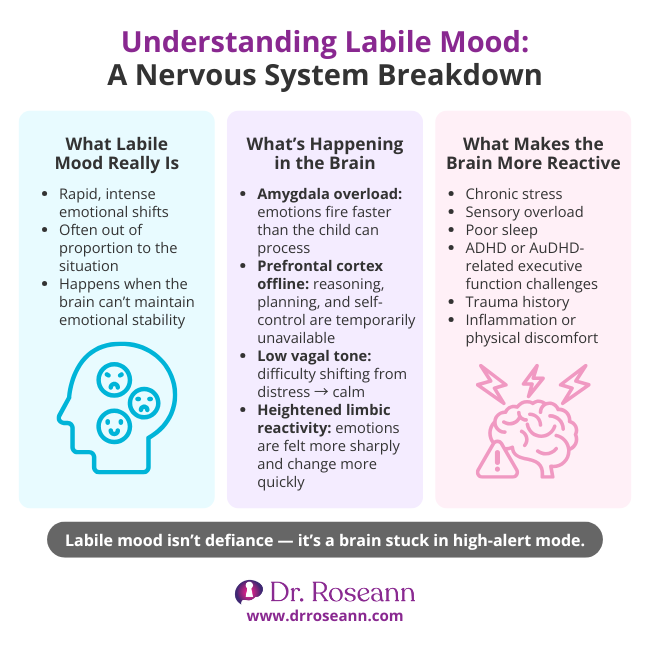
When we talk about being labile in mood, we’re describing a state where emotions shift with remarkable speed and intensity. The word “labile” means “unstable,” perfectly capturing the fleeting nature of these changes. It’s not just being moody; it’s about emotions that feel out of control, overwhelming the child and often leaving parents feeling helpless.
Common Signs and Symptoms of Emotional Lability
Recognizing the signs is the first step. These are more than typical childhood outbursts; they form a distinct pattern of emotional dysregulation.
- Uncontrollable Crying: Crying for seemingly no reason or in response to any strong emotion, even happiness.
- Inappropriate Laughter: Laughing loudly during a quiet or serious moment. This isn’t disrespect, but a brain struggling to regulate.
- Sudden Anger or Temper Tantrums: Explosive anger over minor frustrations that seems to come from nowhere.
- Low Frustration Tolerance: Small setbacks trigger disproportionately large emotional reactions.
- Intense Reactions: All emotions—joy, sadness, anger—are magnified and feel overwhelming.
- Quick Shifts Between Emotions: The hallmark of lability is rapid oscillation between states—happy, furious, then tearful in minutes.
- Feeling Overwhelmed: Children often feel their emotions are too big to handle, leading to a sense of powerlessness.
Underlying Causes and Conditions Linked to a Labile in Mood
If your child seems labile in mood, you’re not failing—and neither are they. These shifts often come from several things working together, and we can untangle them.
- ADHD (Attention-Deficit/Hyperactivity Disorder): Emotional dysregulation is a common feature. Children with ADHD may experience quick frustration and intense anger over minor issues (Posner et al., 2015)
- Autism Spectrum Disorder (ASD): Many adolescents with ASD experience severe mood problems due to their unique neurological wiring.
- Bipolar Disorder: Characterized by intense, longer-lasting mood swings (days or weeks) of depression and mania, which can include periods of lability.
- Post-Traumatic Stress Disorder (PTSD): Trauma can profoundly impact emotional regulation. Mood instability affects 40-60% of those with PTSD, and research recognizes the link between emotional lability and PTSD pathology (Schoenleber et al., 2019).
- Neurological Conditions: Conditions like stroke, MS, or brain tumors can cause Pseudobulbar Affect (PBA), characterized by involuntary crying or laughing.
- PANS/PANDAS: These conditions involve a sudden onset of neuropsychiatric symptoms, including severe mood lability, often after an infection.
- Traumatic Brain Injury (TBI): A brain injury can disrupt the brain’s ability to regulate emotions.
- Anxiety and Depression: The constant internal struggle with worry or sadness can overwhelm a child’s emotional system, leading to outbursts.
- Other Factors: Substance use, hyperthyroidism, medication side effects, and neglect can also contribute.
How Emotional Lability Affects Daily Life and Relationships
Big, fast-changing feelings can touch every part of your child’s day. Take heart – you’re not alone, and help is within reach.
- School Challenges: Sudden outbursts can disrupt learning, lead to peer rejection, and make it hard to focus on schoolwork.
- Friendship Difficulties: Peers may not understand the rapid emotional changes, leading to social isolation.
- Family Stress: The home can become tense, with parents feeling like they’re walking on eggshells, leading to stress and conflict.
- Sibling Relationships: Siblings can feel confused, resentful, or frightened by unpredictable emotions.
- Child’s Self-Esteem: Children often internalize these struggles, feeling “broken” or different, which damages their self-worth.
- Parent Burnout: Constantly managing a child’s intense emotions is draining and can lead to significant parent burnout.
The Brain’s Role and How a Labile in Mood is Diagnosed
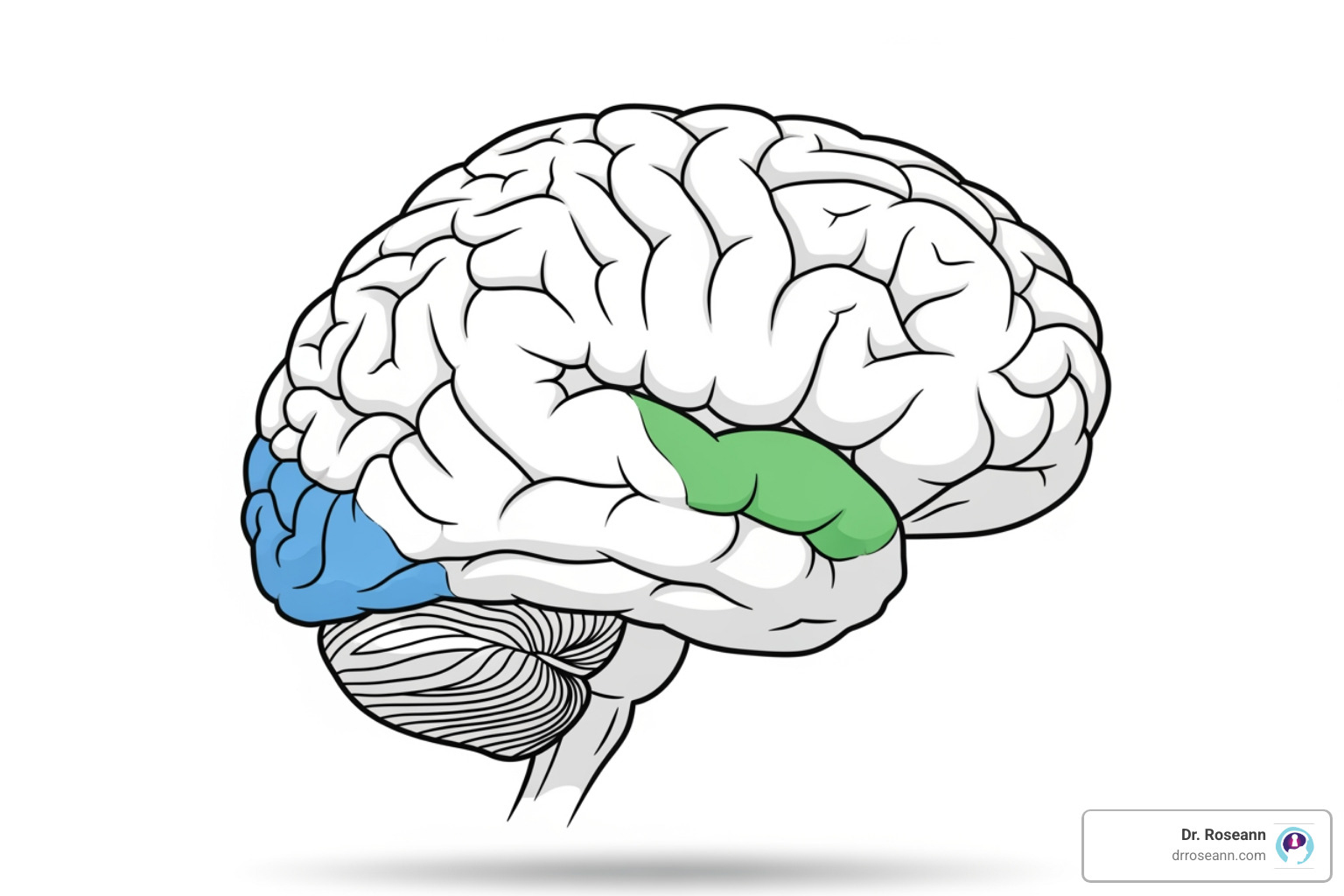
At its heart, a labile mood is often a brain-based issue. As we say, let’s calm the brain first. It’s a cry for help from a dysregulated nervous system. Key brain regions like the limbic system (the “emotional brain”) and the prefrontal cortex (the “control center”) are involved. When they aren’t working together properly, emotional regulation breaks down.
Diagnosis is not a single test but a comprehensive evaluation to find the root cause (Broome et al., 2015). The process includes:
- Detailed Clinical Interview: Discussing the nature, frequency, and intensity of mood shifts.
- Symptom Assessment: Looking for patterns of disproportionate emotional responses and their impact on daily life.
- Ruling Out Medical Causes: Checking for conditions like hyperthyroidism or medication side effects.
- Neurological and Brain-Based Assessment: A neurological exam and, when appropriate, brain imaging like SPECT scans can help pinpoint dysregulation.
- Differentiating Conditions: Distinguishing lability from the longer episodes of bipolar disorder or understanding its presentation in ADHD.
A correct diagnosis is critical for targeted, effective support.
Solutions and Support for a Labile Mood
When your child is labile in mood, it can feel overwhelming, but there is hope and action. Our “game-changing solutions” are designed to help your child achieve better emotional regulation, even when other treatments have failed.
Effective Treatments and Coping Strategies
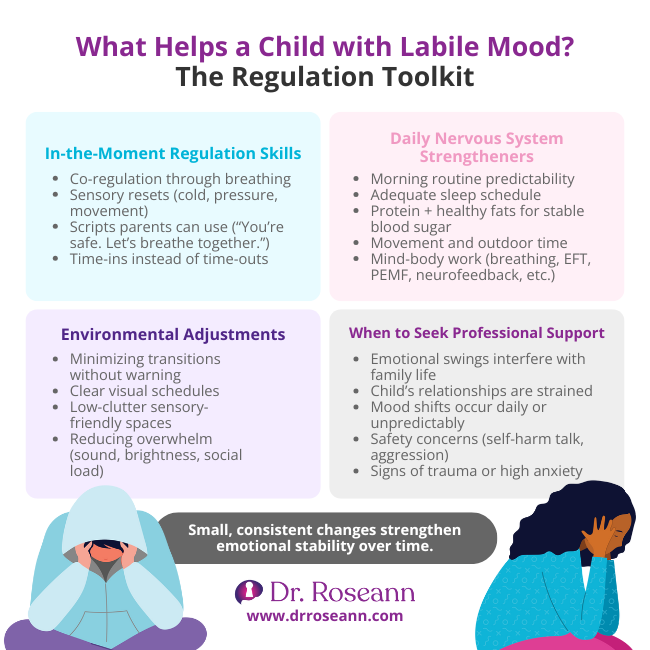
Together, we help your child feel safe and steady while we uncover what’s driving the big feelings. Here are proven steps:

- Neurofeedback: This is a cornerstone of our solutions. Neurofeedback is non-invasive brain training that teaches the brain to self-regulate. It helps children learn to produce healthier brainwave patterns, directly improving emotional control and reducing the intensity of a labile in mood.
- Cognitive Behavioral Therapy (CBT): CBT helps children identify negative thought patterns and teaches them healthy coping skills to manage their emotional responses.
- Dialectical Behavior Therapy (DBT): Adapted for children, DBT teaches core skills like mindfulness, distress tolerance, and emotion regulation, which are invaluable for managing intense emotional shifts.
- Lifestyle Changes: These fundamentals support emotional health:
- Sleep Hygiene: Consistent, adequate sleep is non-negotiable for mood stability.
- Balanced Nutrition: Brain-boosting nutrients like omega-3s support emotional well-being, while avoiding sugar prevents crashes that worsen mood swings.
- Regular Exercise: Physical activity is a powerful mood regulator that reduces stress hormones.
- Identifying Triggers: We help families become detectives to identify and manage triggers like stress, sensory overload, or specific social situations.
- Creating a Calm-Down Corner: A designated safe, quiet space with calming tools (weighted blankets, sensory items) allows a child to retreat and regulate.
- Co-regulation Techniques: As a parent, your calm presence is powerful. During an outburst, stay calm, offer a soothing presence, and model deep breathing to help your child’s nervous system regulate alongside yours.
- Mindfulness Practices: Simple breathing exercises and meditation can help children develop greater awareness and respond to emotions rather than reacting.
- Medication (when necessary): While we prioritize natural solutions, medication may be part of a comprehensive plan for conditions like bipolar disorder or severe anxiety, as discussed with a medical doctor.
Dr. Roseann’s Therapist Quick Tip
In my 30+ years of clinical practice, I’ve learned that labile moods aren’t a sign that a child is being dramatic — they’re a sign their nervous system is overwhelmed and struggling to self-regulate. Here’s what I tell parents: before you address the behavior, address the state of the brain. A dysregulated brain can’t reason, listen, or learn, so your calm presence becomes the anchor that helps your child stabilize.
Try this today:
When your child suddenly shifts into a distressed or irritable mood, pause the conversation and say, “Let’s take a minute to help your body feel safe again.” Then guide them through a co-regulating activity: a slow exhale together, a tight hug (if they like pressure), or a quick sensory reset like holding something cold.
Why it works:
These strategies send a signal to the vagus nerve that the body is safe, which lowers arousal and helps the emotional centers of the brain come back online. Once regulation is restored, your child can actually access problem-solving and communication.
Remember:
You’re not fixing the mood swing — you’re supporting the nervous system behind it. And that’s what helps a child build lasting emotional resilience.
When to Seek Professional Help for Your Child
If your child’s emotional ups and downs feel persistent and unmanageable, it’s time to seek professional help. Trust your parental instincts.
Here are clear indicators it’s time for support:
- It’s consistently interfering with school or academic performance.
- It’s damaging relationships with family or friends, leading to social isolation.
- It’s leading to safety concerns, such as aggression or self-harm.
- You’ve tried everything and feel lost, overwhelmed, or helpless. You’re not alone.
- Your child expresses significant distress about their inability to control their emotions.
- The lability appeared suddenly or worsened after an illness or injury.
At our center, our game-changing solutions get to the root cause of your child’s emotional lability. We don’t just treat symptoms; we address the underlying brain-based issues. We offer comprehensive evaluations and personalized, science-backed strategies, including neurofeedback, to help your child’s brain find balance.
If you’re ready for solutions that can truly make a difference, learn more about how we help an emotionally dysregulated child by visiting our resource page: More info about helping an emotionally dysregulated child.
Citations
Broome, MR., Saunders, KE., Harrison, PJ., and Marwaha, S. (2015). Mood instability: significance, definition and measurement. Br J Psychiatry, 207(4):,283-5. https://doi.org/10.1192/bjp.bp.114.158543.
Posner, J., Kass, E., and Hulvershorn, L. (2014). Using stimulants to treat ADHD-related emotional lability. Curr Psychiatry Rep, 16(10):478. https://doi.org/10.1007/s11920-014-0478-4.
Schoenleber, M., Berghoff, CR., Gratz, KL., and Tull, MT. (2018). Emotional lability and affective synchrony in posttraumatic stress disorder pathology. J Anxiety Disord, 53:68-75. https://doi.org/10.1016/j.janxdis.2017.11.006
Always remember… “Calm Brain, Happy Family™”
Disclaimer: This article is not intended to give health advice, and it is recommended to consult with a physician before beginning any new wellness regimen. *The effectiveness of diagnosis and treatment varies by patient and condition. Dr. Roseann Capanna-Hodge, LLC, does not guarantee specific results.
Are you looking for SOLUTIONS for your struggling child or teen?
Dr. Roseann and her team are all about science-backed solutions, so you are in the right place!
_compressed.jpg?alt=media&token=3d237673-3200-42f5-b71e-0659d8d817a2 "user-inserted")