Estimated reading time: 11 minutes
If your autistic child is overwhelmed by anxiety, you’re not alone—and there are ways to help. Most people miss this part: real change doesn’t come from behavior charts or just “talking it out.”
It begins with calming the brain, not just managing what you see on the surface. I’ll walk you through it, step by step, so you can meet their needs with confidence and bring more peace into your home.
Because when we regulate the brain? Everything else follows.
How Does Sensory Processing Impact Anxiety in Autism?
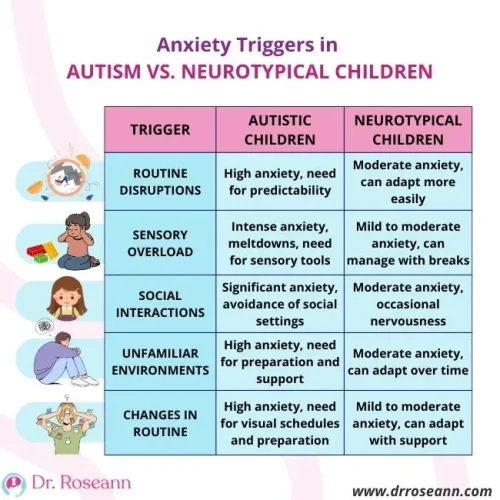
If your autistic child seems constantly overwhelmed or “on edge,” you’re not imagining things—it often goes back to how their brain handles sensory input.
Up to 75% of kids on the spectrum also struggle with Sensory Processing Disorder (SPD). That’s not a small number. And yet, many parents aren’t told just how much sensory overload can trigger anxiety and dysregulation.
Let’s break it down—because once you see the pattern, you can start to shift it.
- Overload triggers anxiety. Too much sensory input floods the brain—like a traffic jam that leads to meltdowns or shutdowns.
- Sensory differences shift perception. Everyday sensations can register as threats, not minor annoyances.
- Anxiety lowers their sensory threshold. The more anxious they are, the less they can handle—even small triggers feel huge.
- The cycle feeds itself. Sensory stress fuels anxiety, and anxiety worsens sensory overload.
So if your child seems “too sensitive” or “always melting down,” I want you to know: there’s a reason. And there’s a way forward.
You’re not alone in this. I’m here to help you decode the behavior and create lasting change—because what you see as behavior is really brain dysregulation.
What’s Happening in My Child’s Brain During Anxiety?
Ever seen your child suddenly freeze, dash off, or burst into tears over something that seemed small—like a barking dog or a stranger brushing past? You pause. You wonder, “Why now?”
But here’s the thing: that’s not misbehavior. That’s a brain stuck in survival mode, sounding the alarm.
Anxiety doesn’t knock politely—it flips a switch. And once that switch is on? It’s like trying to turn off a fire alarm with a whisper.
Your child can’t just “calm down.” Not without help. So what’s really happening in their brain when everything spirals?
The amygdala sounds the alarm.
Think of it like your brain’s smoke detector. It’s constantly scanning for danger. When it thinks it spots one—real or imagined—it floods the system with distress signals.
Stress hormones flood the body.
Cortisol and adrenaline hit hard, getting the body ready to run or fight—even when the “threat” is just a loud laugh or a crowded space.
The nervous system shifts into survival mode.
Higher-level thinking? Offline. Emotional regulation? Out the window. That’s why trying to reason with your child in these moments usually backfires. They’re not being defiant—their brain literally can’t process your words.
Everyday experiences feel threatening.
For a child with a hypersensitive amygdala, even a crowded grocery aisle can feel like a battlefield. The world stops making sense. Their body just wants out.
Sensory overload makes it worse.
Bright lights, loud sounds, scratchy clothes—all these can overwhelm the system and magnify anxiety.
Self-regulation becomes nearly impossible.
Once flooded, your child can’t just will themselves calm. Their nervous system hasn’t learned how to hit the brakes yet. And no, this isn’t about being dramatic or spoiled—it’s biology.
A Real-Life Example: Liam’s Story
Liam was eight. Bright-eyed, loved animals, adored trips to the park—as long as it was quiet.
One Saturday, they arrived and it was chaos. Dogs barking. Swings creaking. Kids yelling over one another.
He stood still. Didn’t move a muscle. Then his fists clenched. Within minutes, he yelled, “I want to go home!”
This wasn’t a tantrum. It was his nervous system reacting to overload. And like so many autistic kids, Liam wasn’t being “difficult”—his brain just needed help feeling safe again.
And here’s what I want every parent to know: When you calm the brain first, everything else follows. That’s not just a tagline—it’s the foundation of my work.
How Can I Reduce My Autistic Child’s Anxiety Naturally?
Reducing anxiety in autistic children starts with understanding what’s really happening in the brain. This isn’t about fixing “bad behavior”—it’s about creating safety, lowering stress, and teaching the brain how to feel calm again.
Yes, there are natural, brain-based ways to do that. And no, it doesn’t have to involve medication.
When you support the brain instead of working against it, kids begin to calm. That’s when real healing starts. That’s when anxiety softens and regulation grows roots.
Let’s break down six powerful ways you can support your child’s brain—and ease their anxiety—naturally:
1. Create a Supportive Environment
You can’t calm a child in chaos. You need a haven, not just a home.
So build a space that speaks calm to their brain—because when the environment feels safe, the nervous system can settle.
Think structure, not rigidity. Sensory-friendly doesn’t mean sterile. Try:
- Predictable routines for meals, sleep, and transitions
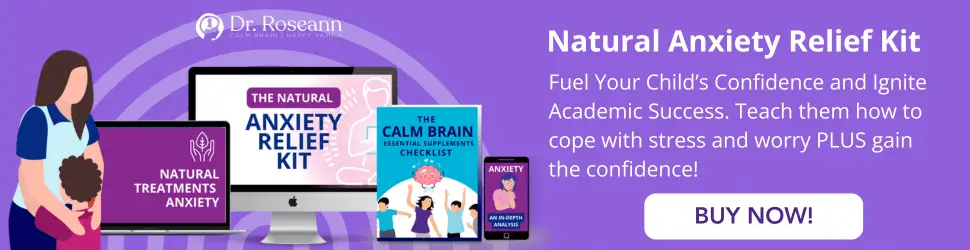
- Supports like noise-canceling headphones, fidget tools, or weighted blankets
- Reducing overwhelm by softening lights and sounds
A predictable environment gives the brain something to hold onto. It tells the nervous system, “You’re okay. You can relax now.”
2. Encourage Communication
When a child can’t express what they feel, it bottles up. Then anxiety explodes.
And let’s be honest—language doesn’t always come easy when your brain’s in survival mode.
That’s why alternative forms of communication are lifesavers. You can:
- Use visual schedules or social stories to reduce the unknown
- Try AAC tools or even simple picture cards
- Offer mood meters or emotion thermometers to name feelings without words
When your child feels seen—even without speaking—their anxiety begins to shrink. Understanding creates emotional safety. That’s where trust lives.
3. Embrace Calming Techniques
Autistic kids can learn to self-regulate—but they need tools that work with their biology.
Try incorporating:
- Deep breathing or square breathing
- Progressive muscle relaxation
- Simple mindfulness or grounding games
- PEMF (Pulsed Electromagnetic Field) therapy
A Note on PEMF: One small study (Borges et al., 2019) explored how PEMF sessions impacted anxiety and chronic pain. Participants reported lower stress levels and improved function.
While it’s not a cure, PEMF—like my CALM PEMF™ device—can be a gentle, drug-free way to support the brain and body’s natural calming response.
4. Harness the Power of Visual Aids and Sensory Breaks
Words don’t always land when the brain’s on high alert.
But visuals? They bypass all that noise. They speak directly to the nervous system.
Here’s how to use them well:
- Show calming images—like waves, trees, or soft textures
- Set up a visual calm corner with dim lights, plush pillows, and quiet vibes
- Use timers, picture prompts, or transition cards to reduce uncertainty
A single picture can replace a dozen reminders. Sometimes that’s all it takes to prevent a spiral.
5. Promote Social Skills and Confidence
Social anxiety doesn’t mean your child can’t connect—it means their nervous system doesn’t feel safe doing it. And when we pressure that system? Anxiety explodes.
Instead, create gentle bridges to connection:
- Encourage play centered on their special interests
- Join support groups or create low-pressure small group activities
- Praise strengths, not just “successes,” and celebrate the tiny wins
When your child feels capable and safe, confidence follows. Connection isn’t forced—it blooms.
Remember: What you see as behavior is really brain dysregulation. So approach it with curiosity, not criticism.
6. Seek Professional Guidance
While natural tools are powerful, collaboration matters.
Look for:
- Providers trained in neurodiversity-affirming care
- Therapies like CBT adapted for autism, play therapy, or occupational therapy for sensory needs
- Professionals who understand that the goal isn’t to “fix” your child—it’s to help their nervous system feel safe
Want to know how to reduce anxiety in an autistic child without medication? Download my free Natural Anxiety Relief Kit and discover science-backed tools to help your child regulate, connect, and thrive—naturally.
Read more about: A Nervous System Approach to Autism Treatment: What Every Parent Needs to Know
Parent Action Steps
FAQs
How do I calm down anxiety in autism?
Start by calming the nervous system. Use sensory-friendly tools (like noise-canceling headphones), visual aids, calming routines, and brain-based practices like deep breathing, grounding exercises, or PEMF therapy. Create an environment that feels safe and predictable.
Are there any natural supplements that can help with anxiety in autistic children?
Some parents explore gentle, natural options like magnesium, L-theanine, or melatonin to support anxiety and sleep. While these can be helpful, they’re not one-size-fits-all. Always talk to a trusted provider who understands both autism and nervous system regulation before introducing any supplement or medication.
How can I address anxiety-related sleep disturbances in my autistic child?
Start with calming the brain before bedtime. Use a predictable, soothing routine—think soft lighting, relaxing sounds, and screens off an hour before bed. Try tools like deep breathing, weighted blankets, or PEMF therapy to help their nervous system shift out of “high alert” and into rest mode.
Citations
Borges, B., Hosek, R., & Esposito, S. (2019). Effects of PEMF (pulsed electromagnetic field) stimulation on chronic pain and anxiety utilizing decreased treatment frequency and duration application. Frontiers in Neurology, 10. https://doi.org/10.3389/conf.fneur.2019.62.00007
Samson, A. C., Phillips, J. M., Parker, K. J., Shah, S., Gross, J. J., & Hardan, A. Y. (2014). Emotion dysregulation and the core features of autism spectrum disorder. Journal of autism and developmental disorders, 44(7), 1766–1772. https://doi.org/10.1007/s10803-013-2022-5
Dr. Roseann is a mental health expert in Anxiety who frequently is in the media:
- Reconditioned with Laurie Vaknine (Podcast) Managing Anxiety & Mental Health in Children.
- Sparking Wholeness (Audio) Parenting Anxious Kids.
- The Happy Student (Podcast) Stress and Anxiety 101.
Always remember… “Calm Brain, Happy Family™”
Disclaimer: This article is not intended to give health advice and it is recommended to consult with a physician before beginning any new wellness regime. *The effectiveness of diagnosis and treatment vary by patient and condition. Dr. Roseann Capanna-Hodge, LLC does not guarantee certain results.
Are you looking for SOLUTIONS for your struggling child or teen?
Dr. Roseann and her team are all about science-backed solutions, so you are in the right place!
Grab your complimentary copy of
© Roseann-Capanna-Hodge, LLC 2024