
Estimated reading time: 7 minutes
Emotional reactivity is when a person reacts to stress, anger, or hurt with an intensity that seems out of proportion to the trigger. These reactions happen quickly and impulsively, often before the brain can process what’s really going on. Instead of a measured response, you might see explosive anger, uncontrollable crying, or complete shutdown—leaving both you and your child feeling drained and confused.
If your child melts down over small changes, snaps at siblings without warning, or shuts down when faced with correction, you’re seeing emotional reactivity in action. And you’re not alone. Research shows that emotional dysregulation is linked to many mental health challenges in children and teens, including anxiety, depression, and ADHD (Bierens, et al., 2023; Treier et al., 2024; Biederman et al., 2023).
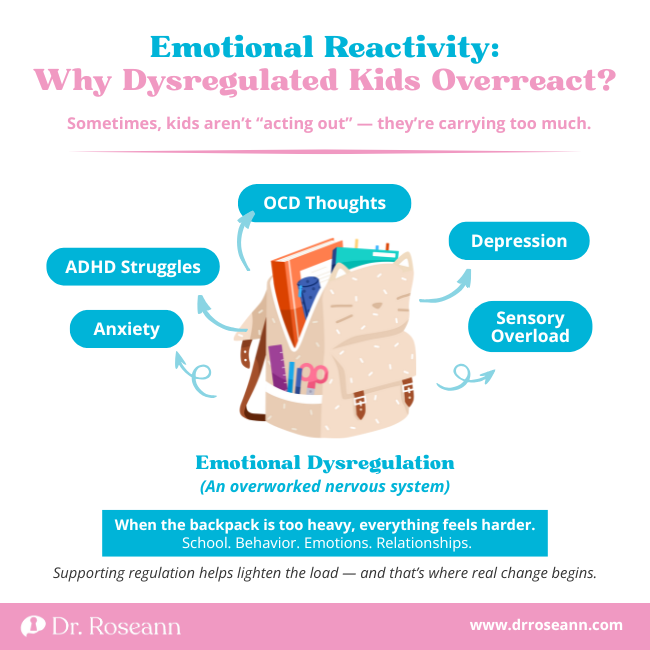
The good news? Emotional reactivity isn’t permanent. It’s a sign that your child’s nervous system is overwhelmed. With the right tools, you can help them build the skills to regulate their emotions and respond instead of React.
I’m Dr. Roseann Capanna-Hodge, and for over three decades, I’ve specialized in helping children and families overcome these challenges using science-backed, natural strategies. I’ve seen how addressing emotional reactivity can transform the entire family dynamic. In this guide, we’ll break down what emotional reactivity is, why it happens, and what you can do about it. Because when you calm the brain first, everything else gets easier.
Related content about emotional reactivity:
What is Emotional Reactivity, and How Does it Manifest?
Emotional reactivity, or emotional dysregulation, is about the intensity and speed of an emotional response. A standard response is proportionate to the situation (e.g., mild annoyance in traffic). A reactive response is an intense overreaction (e.g., rage in traffic), driven by the “fight-or-flight” system. People who react this way often regret their actions later.
Common manifestations of emotional reactivity include:
- Anger outbursts: Yelling, shouting, or throwing objects impulsively.
- Uncontrollable crying: Intense crying over seemingly minor issues.
- Heightened anxiety: Feeling overwhelmed by everyday challenges.
- Snapping or lashing out: Responding sharply to perceived frustrations.
- Withdrawal or shutdown: Becoming quiet or numb when overwhelmed.
- Difficulty calming down: It can take at least 20 minutes for the nervous system to calm down after a trigger.
This reactivity can be internal, like 10-year-old Henry lying awake replaying a small mistake in class until his stomach hurts, or it can show up between people, like when Henry slams his backpack after being corrected, his dad reacts by yelling, and suddenly a tiny issue has snowballed into a full-blown family blowup.
Underlying Causes and Long-Term Consequences
Developmental psychologist Pamela M. Cole, PhD, explains that emotional regulation relies on many connected systems in the brain, including attention, language, planning, and cognitive development. When those systems are under stress or out of sync, big emotional reactions can show up. That’s why emotional reactivity is complex and rarely about just one thing.
Understanding the “why” behind your child’s reactions is the first step toward finding solutions that actually help the brain calm and heal.
Common Underlying Causes:
| Underlying factor | How it fuels emotional reactivity in kids |
|---|---|
| Childhood experiences and trauma | High-stress or neglectful environments can rewire a child’s brain to scan for danger, making them more threat-sensitive and more likely to develop mood and anxiety disorders later on. |
| Learned behaviors | Children copy what they see. If big reactions, yelling, or shutdowns are common at home, kids often adopt those same emotional patterns. |
| Chronic stress | When a child’s nervous system is constantly on high alert (from school pressure, family conflict, or instability), even small triggers can feel overwhelming and lead to explosive reactions. |
| Mental health conditions | Anxiety, depression, bipolar disorder, and borderline personality traits often show up as intense, fast emotional swings. Research suggests that heightened emotional reactivity and poor emotion regulation are both symptoms of, and risk factors for, anxiety and depression. |
| Neurodevelopmental conditions | Emotional dysregulation is a core part of ADHD and is also very common in Autism Spectrum Disorder (ASD), making it harder for kids to pause, think, and respond calmly. |
| Physiological factors | Low blood sugar, chronic pain, sleep problems, or illness can lower a child’s tolerance, so they react more quickly and more intensely. |
| Brain differences or injury | Traumatic brain injury (TBI), stroke, or other neurological changes can affect brain regions that control impulses and emotions, leading to stronger, less controlled reactions. |
When left unaddressed, the consequences of emotional reactivity can be significant:
| Impact | How Emotional Reactivity Affects Your Child |
|---|---|
| Strained relationships | Frequent outbursts or shutting down can erode trust and create distance with family, friends, and peers. |
| Reduced well-being | Reactivity can fuel cycles of anxiety and depression, making everyday situations feel bigger and more overwhelming than they are. |
| Impaired social functioning | Trouble managing emotions in the moment can make it hard to keep friendships, which may lead to social withdrawal or isolation. |
| Negative self-perception | After blowups, many kids feel guilt, shame, or regret, which chips away at self-esteem and can create a sense of helplessness. |
| Higher risk for mental health issues | Unchecked emotional reactivity in childhood is linked to a greater risk of later mood and other mental health disorders, as shown in scientific research on mood disorders. |
Addressing these patterns early is vital for a child’s long-term emotional resilience and well-being.
How to Break the Cycle: Practical Strategies for Parents

Seeing your child struggle with intense emotions is incredibly challenging. But you have the power to help them break the cycle of emotional reactivity. It starts with a simple philosophy: “Let’s calm the brain first.” When we regulate the nervous system, we create space for healthier responses. “Behavior is communication.” A reactive outburst is your child’s way of saying they’re overwhelmed. We are here to empower you with the tools to respond effectively.
Core Techniques for Managing Emotional Reactivity in the Moment
When emotions run high, the goal is to de-escalate and create safety. Here are core techniques to use:
- Pause Before Responding: This is the most critical skill. When you feel a surge of emotion, resist reacting immediately. Take a deep breath. This brief pause allows your rational brain to catch up. If needed, say, “I need a moment to calm down,” and step away, promising to return when you’re both calmer.
- Active Listening: A reactive person often feels unheard. Active listening defuses tension and fosters connection. The key is to “understand the message without letting our own biases, thoughts, and emotions get in the way.”
- Listen to understand, not to reply.
- Reflect back what you hear: “It sounds like you’re saying… Is that right?”
- Ask clarifying questions to understand their perspective.
- Validate their feelings, even if you don’t agree with the behavior: “It sounds like you’re feeling really frustrated.”
- Self-Awareness and Identifying Triggers: Pay attention to what precedes your child’s reactive moments. Is it hunger, fatigue, a specific demand, or sensory overload? Help your child name their emotions (“I see you’re feeling angry”). This gives them a vocabulary for their experience, which is the first step to managing it.
- Assume Positive Intent: Instead of assuming your child is deliberately trying to annoy you, consider other possibilities. Are they tired, overwhelmed, or seeking connection? Shifting your perspective can dramatically reduce your own reactive response.
- Co-regulation: Children need you to lend your calm to their storm. By remaining calm yourself, validating their feelings, and offering comfort, you help their nervous system settle. This isn’t about fixing their emotion, but about being present with them through it.
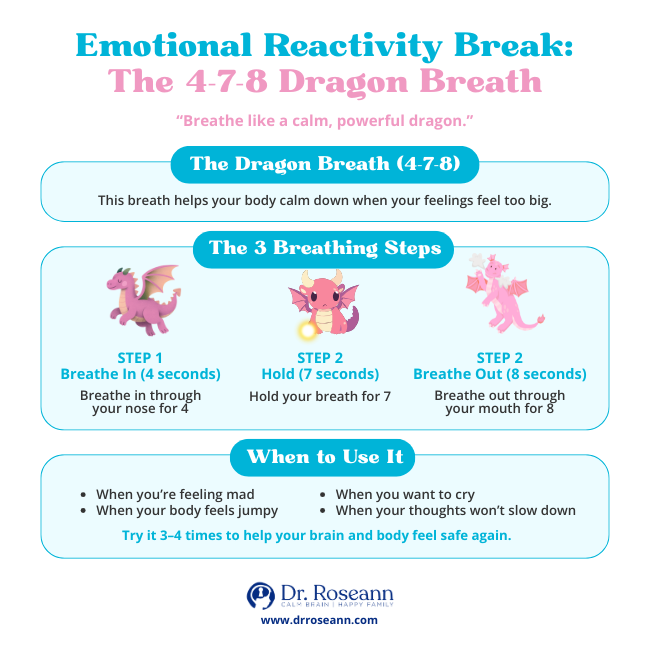
For an immediate calming technique, try the 4-7-8 breathing technique. This simple breathwork helps regulate the nervous system.
Building Long-Term Resilience and Emotional Regulation Skills
While in-the-moment strategies are vital, true change comes from building long-term skills. This teaches the brain to respond thoughtfully rather than react impulsively.
- Emotional Regulation Skills: This is the ability to understand, process, and manage emotions constructively. Research shows that managing emotional reactivity positively impacts mental health, social connections, and resilience. We empower children to become their own emotional thermostats.
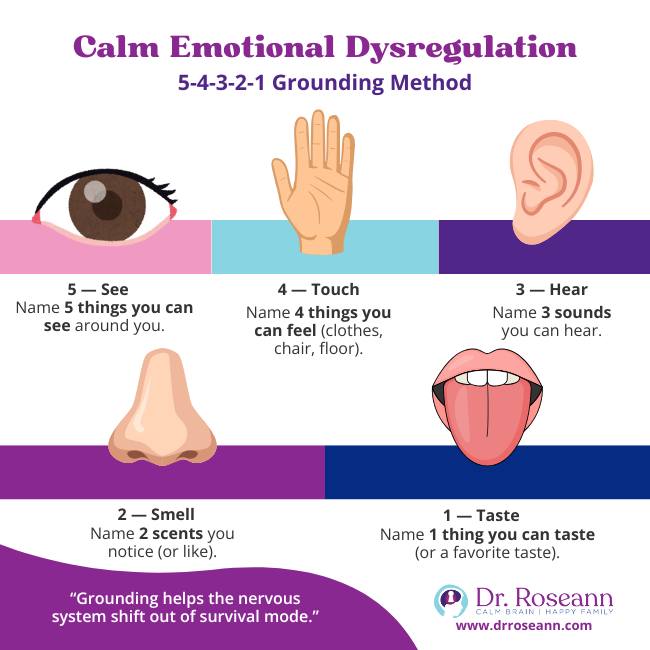
- Mindfulness and Meditation: These practices train the brain to observe feelings without being swept away by them. For kids, try simple grounding techniques like the 5-4-3-2-1 method (noticing 5 things you see, 4 you can touch, etc.). Regular practice has a cumulative effect, improving emotional regulation over time.
- Reappraisal vs. Rumination: We can change how we feel by changing how we think. Avoid rumination (repeatedly focusing on negative thoughts). Instead, practice reappraisal, which involves reframing a situation to lessen its emotional impact. Ask, “What can I learn from this?” or “Is there another way to look at this?”
- Feeling Through Emotions: Suppressing difficult emotions often makes them stronger. It’s better to feel through them—to acknowledge the emotion, experience it safely, and let it pass. This builds emotional literacy and resilience.
- When to Seek Professional Help: While these strategies help, professional support is sometimes essential. Consider therapy if:
- Reactivity significantly impacts your child’s school, social life, or family relationships.
- Your child expresses thoughts of self-harm or harming others.
- You feel overwhelmed and unsure how to help.
A therapist can identify the root of reactivity and provide evidence-based tools like CBT or DBT. For children with conditions like ADHD, treating the underlying condition is key to improving emotional regulation.
At Dr. Roseann, our solutions focus on gently calming the nervous system and addressing the root causes of emotional reactivity. We blend science-backed methods with a warm, family-centered approach to create real, sustainable change.
Find out how we can support your child and your whole family: More info about our solutions.
Citations
Biederman, J., DiSalvo, M., Vaudreuil, C., Wozniak, J., Uchida, M., Woodworth, KY., Green, A., and Faraone SV. (2022). Disentangling the heterogeneity of emotional dysregulation in referred youth using the Child Behavior Checklist, attending to age and sex effects. J Affect Disord, 309:259-265. https://doi.org/10.1016/j.jad.2022.04.108.
Bierens, M., Hartman, CA., Klip, H., Deckers, S., Buitelaar, J., and Rommelse, N. (2023). Emotion dysregulation as cross-disorder trait in child psychiatry predicting quality of life and required treatment duration. Front Psychiatry, 14:1101226. https://doi.org/10.3389/fpsyt.2023.1101226.
Treier, A.-K., Döpfner, M., Ravens-Sieberer, U., Görtz-Dorten, A., Boecker, M., Goldbeck, C., Banaschewski, T., Aggensteiner, P.-M., Hanisch, C., Ritschel, A., Kölch, M., Daunke, A., Roessner, V., Kohls, G., & Kaman, A. (2024). Screening for affective dysregulation in school-aged children: Relationship with comprehensive measures of affective dysregulation and related mental disorders.* European Child & Adolescent Psychiatry,* 33:381–390. https://doi.org/10.1007/s00787-023-02166-z.
Always remember… “Calm Brain, Happy Family™”
Disclaimer: This article is not intended to give health advice, and it is recommended to consult with a physician before beginning any new wellness regimen. *The effectiveness of diagnosis and treatment varies by patient and condition. Dr. Roseann Capanna-Hodge, LLC, does not guarantee specific results.
Are you looking for SOLUTIONS for your struggling child or teen?
Dr. Roseann and her team are all about science-backed solutions, so you are in the right place!