
Estimated reading time: 8 minutes
An emotional dysregulation test can be a vital first step in understanding why your child struggles to manage their emotions, but it’s just the beginning of finding real solutions.
Why an Emotional Dysregulation Test Matters for Your Child
Quick Guide to Emotional Dysregulation Tests:
| What It Is | What It Does | What It Doesn’t Do |
|---|---|---|
| Self-report questionnaire (like DERS or DERS-16) | Screens for difficulties managing emotions | Doesn’t diagnose a condition |
| Online quiz (free, 10-20 questions) | Helps identify patterns and triggers | Can’t replace professional evaluation |
| Clinical assessment | Provides comprehensive understanding | Takes time and professional guidance |
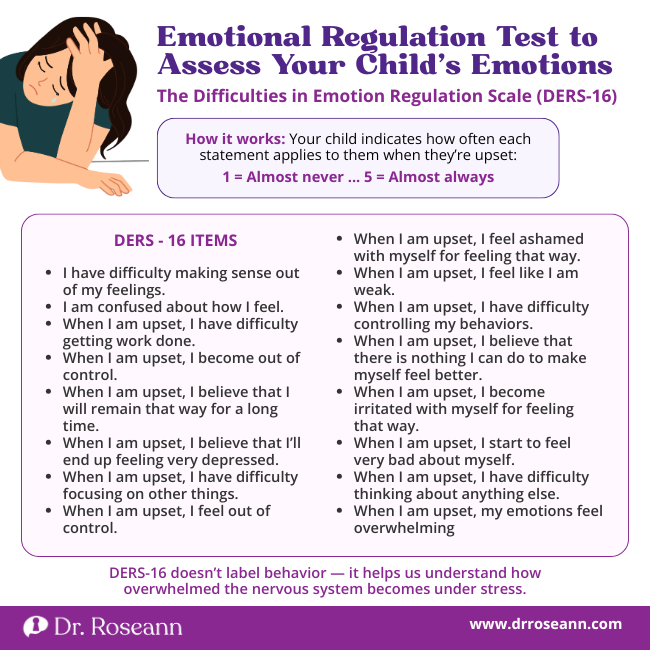
One of the most common tools is the Difficulties in Emotion Regulation Scale (DERS-16), a short questionnaire that screens for emotional management difficulties.
If you’re watching your child struggle with intense outbursts, sudden mood swings, or prolonged meltdowns, you’re not alone. Emotional intensity isn’t a character flaw; it’s a sign their nervous system needs support. This is especially true for children with ADHD, anxiety, or a history of trauma.
What emotional dysregulation looks like in kids:
- Explosive anger over small things
- Difficulty calming down once upset
- Intense reactions that don’t match the situation
- Trouble transitioning between activities
- Frequent meltdowns or shutdowns
Behavior is communication. These signs are your child’s way of telling you their brain needs help, and a test can be the first step toward understanding what’s happening.
I’m Dr. Roseann Capanna-Hodge, and for over 30 years, I’ve helped families move beyond the chaos of emotional dysregulation with science-backed, natural solutions. Using tools like the emotional dysregulation test alongside comprehensive assessments like QEEG brain mapping, we can understand your child’s nervous system and transform their ability to thrive.
Know your emotional dysregulation test terms:
- behavioral dysregulation definition
- can adhd cause emotional dysregulation
- how to help emotional dysregulation
Understanding Emotional Dysregulation: Is a Test the First Step?
Emotional dysregulation is more than just strong feelings; it’s a difficulty managing and responding to emotional experiences in a healthy way. For children, this can look like emotional intensity that feels out of proportion to the situation, leading to challenges at school and home.
At its core, emotional dysregulation is often a sign that a child’s nervous system is struggling. As we often say, “Behavior is communication,” and these intense reactions are a child’s way of showing that something isn’t right internally. You’re not alone, and you can learn more about what dysregulation is and the emotional indicators of a dysregulated nervous system.
What are the common signs of emotional dysregulation?
The signs of emotional dysregulation are your child’s brain and body signaling that they need help. It’s important to look beyond the behavior and see the underlying emotional struggle.
Common signs include:
- Intense Emotional Reactions: Reactions that seem much stronger or last longer than the situation warrants, like a meltdown over a minor disappointment.
- Rapidly Shifting Moods: Quick, unpredictable shifts from happy to angry or withdrawn with no clear trigger.
- Difficulty Calming Down: An inability to self-soothe or respond to calming attempts for an extended period.
- Outbursts of Anger or Aggression: Yelling, screaming, or physical aggression in response to minor provocations.
- High Anxiety or Worry: Constant worrying, excessive fear, or panic attacks that indicate a nervous system on high alert.
- Social Withdrawal: Avoiding friends, family, or social activities to prevent potential emotional triggers.
- Trouble with Transitions: Intense resistance or meltdowns when moving from one activity to another.
- Physical Symptoms: Frequent headaches, stomachaches, or fatigue, which can be the body’s reaction to chronic stress. Learn more about the physical signs of emotional dysregulation.
What causes emotional dysregulation?
The causes are complex, involving a mix of genetic, environmental, and neurological factors. It’s rarely a single issue but a combination of influences.
Primary contributing factors include:
- Trauma and Adverse Childhood Experiences (ACEs): Chronic stress or trauma can change the brain’s ability to cope. Understanding the impact of trauma on regulation is key.
- Neurodevelopmental Conditions:
- ADHD: Executive function challenges in ADHD affect emotional control, leading to impulsivity and intense frustration. There’s a strong link between emotional dysregulation and ADHD.
- Autism Spectrum Disorder (ASD): Difficulties processing sensory information and understanding emotions can lead to overwhelm.
- Anxiety and Mood Disorders: Conditions like chronic anxiety, depression, or bipolar disorder keep the nervous system in a state of hyperarousal or intense flux.
- PANS/PANDAS: Infections can trigger a sudden onset of severe emotional lability and other neuropsychiatric symptoms.
- Genetic Predisposition: Some children may be born with a more sensitive nervous system.
- Environmental Stressors: Ongoing family conflict, academic pressure, or social difficulties can overwhelm a child’s coping skills.

Understanding these root causes is the first step toward providing targeted, effective support.
Taking an Emotional Dysregulation Test: What You Need to Know
Taking an emotional dysregulation test can feel like a productive first step, but it’s important to understand their role. Online quizzes and self-assessments are excellent screening tools and conversation starters, but they are not a definitive diagnosis. Think of them as a compass pointing you toward areas of concern.
A formal diagnosis requires a professional evaluation. At our center, we go beyond labels to understand why a problem is happening. We use comprehensive evaluations like QEEG Brain Mapping to see how your child’s brain is functioning. This allows us to “calm the brain first” and find solutions that work. If you’re curious about other assessments, you can learn about what is ADHD testing like?.

What are the different types of emotional dysregulation tests?
Assessments for emotional dysregulation range from quick questionnaires to in-depth professional evaluations.
- Self-Report Questionnaires: These are the most accessible tools, often completed by a parent or older child. The Difficulties in Emotion Regulation Scale (DERS-16) is a short, validated screener that is widely used (Bjureberg, 2017).
- Clinical Interviews and Observations: A mental health professional will conduct a thorough interview to understand your child’s history, triggers, and coping skills. They may also observe your child’s behavior to see how dysregulation manifests in real-time.
- Comprehensive Professional Assessments: Conducted by specialists, these evaluations combine interviews, questionnaires, and other tools to build a complete picture. To learn how different tests provide insight, explore our article, can a neurodivergent test unlock the brain?.
How do I interpret the results of an emotional dysregulation test?
Interpreting results from an online quiz or self-assessment requires caution. These are screening tools, not diagnostic instruments.
- View Scores as Indicators: Higher scores generally suggest greater difficulty with emotional regulation. They highlight areas of concern, but they don’t define your child.
- Use as a Starting Point: The results are a valuable starting point for a conversation with a mental health professional. A dysregulation checklist can help you organize your observations for that discussion.
- Seek Professional Context: A high score doesn’t mean your child has a specific condition. A professional can put the results in context, as dysregulation is a symptom of many issues, including ADHD, anxiety, and trauma. A comprehensive evaluation is essential to understand the root cause and find the right support.
Beyond the Test: Solutions and Support for Your Child
An emotional dysregulation test opens the door to understanding, but real change comes from targeted solutions and support. We believe in getting to the root cause of your child’s struggles to empower them with the skills to thrive. Our mission is to provide “game-changing solutions” with rapid, effective results, even when other treatments have failed. We are here to help you get help for your emotionally dysregulated child and see them flourish.
What are the treatment options for emotional dysregulation?
Our holistic, evidence-based approach targets the brain and nervous system directly. The goal is always to calm the brain first. Effective treatment options include:
- Neurofeedback: A non-invasive brain training technique that teaches the brain to self-regulate. See our complete guide to neurofeedback to learn more.
- Biofeedback: Helps children gain control over bodily functions like heart rate and breathing to manage emotional states.
- Psychotherapy: Modalities like Dialectical Behavior Therapy (DBT) and Cognitive Behavioral Therapy (CBT) teach practical skills for managing emotions and changing negative thought patterns. Explore our approach to therapy for emotional dysregulation.
- Parent Coaching: Equips parents with strategies to co-regulate with their child and create a supportive home environment.
- Pulsed Electromagnetic Field (PEMF) Therapy: A powerful non-medication treatment that uses gentle electromagnetic fields to reduce stress and improve the brain’s ability to self-regulate.
- Nutritional and Lifestyle Support: Addressing gut health, sleep, and nutrition can significantly impact brain function and emotional regulation.
How can I help my child improve their emotional regulation skills?
As a parent, your role is to guide and support your child as they learn. Here are actionable strategies you can use at home:
- Co-regulation: Your calm presence can regulate your child’s nervous system. Stay calm and offer a soothing voice. Learn about co-regulation and parenting: sharing your calm.
- Mindfulness and Breathing: Teach simple deep breathing exercises to calm the body’s stress response.
- Create a Calming Corner: Designate a safe space with sensory tools where your child can go when overwhelmed.
- Name Emotions: Help your child build emotional literacy by giving words to their feelings (e.g., “It looks like you’re feeling frustrated.”).
- Problem-Solve Together: Once calm, brainstorm solutions to whatever triggered the dysregulation. This builds their confidence.
- Use Coping Skills Activities: Engage in activities like drawing, journaling, or playing outside to manage stress. Find ideas in our coping skills activities for kids guide.
- Follow Parenting Tips: Our 9 emotional regulation tips for parents offer more practical advice.
Citations
Bjureberg, J., Ljótsson, B., Tull, MT., Hedman, E., Sahlin, H., Lundh, LG., Bjärehed, J., DiLillo, D., Messman-Moore, T., Gumpert, CH., and Gratz, KL. (2017) Development and validation of a brief version of the difficulties in emotion regulation scale: The DERS-16. J Psychopathol Behav Assess, 38(2):284-296. https://doi.org/0.1007/s10862-015-9514-x.
Always remember… “Calm Brain, Happy Family™”
Disclaimer: This article is not intended to give health advice, and it is recommended to consult with a physician before beginning any new wellness regimen. *The effectiveness of diagnosis and treatment varies by patient and condition. Dr. Roseann Capanna-Hodge, LLC, does not guarantee specific results.
Are you looking for SOLUTIONS for your struggling child or teen?
Dr. Roseann and her team are all about science-backed solutions, so you are in the right place!