Estimated reading time: 9 minutes
Do mornings feel like a battlefield? Meltdowns come out of nowhere? It’s not bad parenting; it’s your child’s dysregulated brain asking for help.
If your child has ADHD, you know how fast things can unravel. Even simple routines, like breakfast or getting dressed, can feel impossible. That’s why learning coping skills for ADHD child brains is so important.
These aren’t discipline tricks or quick fixes. They’re practical, brain-based tools that calm the nervous system so your child can focus, connect, and feel more in control.
In this guide, you’ll discover 10 essential coping skills every ADHD child needs. Understand why they work, and how to put them into practice at home. You’ll also hear real-life parent stories and get hopeful, science-backed strategies you can start using today.
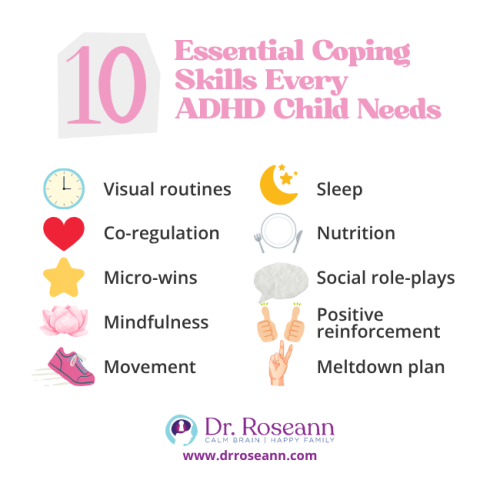
The 10 Coping Skills Every ADHD Child Can’t Thrive Without
Every child with ADHD needs practical, brain-based tools that calm their nervous system and make daily life easier. Here are the 10 essential coping skills to start practicing at home.
1. Visual routines and timers
Structure brings comfort to an ADHD brain. Visuals and timers reduce nagging and make “what’s next” easy to follow.
2. Co-regulation and emotion naming
Your calm helps your child’s nervous system settle. Naming emotions out loud teaches them words for big feelings.
3. Motivation by micro-wins
Big tasks feel overwhelming, but small wins build momentum. Breaking goals into steps makes progress visible and doable.
4. Mindfulness minis
Short breathing or sensory games help kids reset in the moment. Just one minute of mindfulness can calm reactivity.
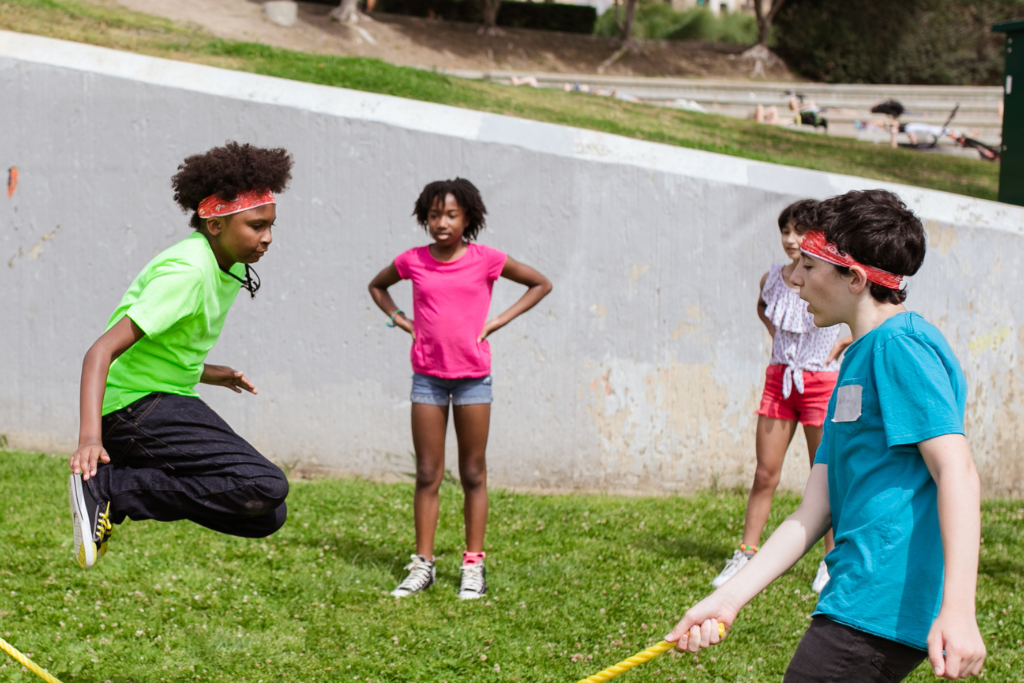
5. Movement snacks
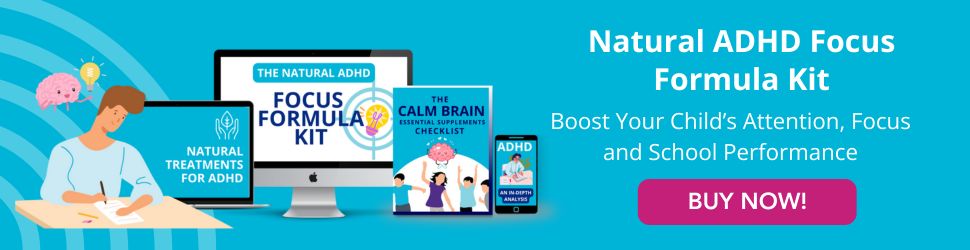
Even 10 minutes of rhythmic movement boosts focus. Movement is regulation, not a reward.
6. Sleep rhythm
A predictable bedtime and wake-up set the brain’s clock. Consistent sleep anchors focus, behavior, and mood.
7. Protein-forward meals
Balanced meals with protein and healthy fats fuel attention. Food isn’t just nutrition—it’s regulation for the brain.
8. Social role-plays
Practice tricky social moments before they happen. Role-playing gives your child confidence to try again in real life.
9. Positive reinforcement
Catch the good and name it right away. Praise and rewards teach the brain what to repeat.
10. Meltdown plan
Explosions happen when the nervous system is overwhelmed. Having a plan for safety and soothing makes recovery quicker.
Start with one or two coping skills and build from there. Over time, your child’s toolbox will grow. And so will their confidence.
Which Coping Skills Do ADHD Children Need First?
Start with regulation. When the nervous system is calm, focus, memory, and flexibility come back online. In my Regulation Rescue Kit framework, we always Regulate → Connect → Correct™.
Quick Start
- Regulate: breath + body (slow exhale, wall push, 5–4–3–2–1 grounding)
- Connect: name the feeling, validate the struggle
- Correct: teach one tiny skill (timer, checklist, “first-then” plan)
Parent story (Arlene & Ben, age 9):
Mornings used to mean tears, lost shoes, and a rushed scramble out the door. Arlene dreaded that daily chaos—it always left both her and Ben drained before the day even began.
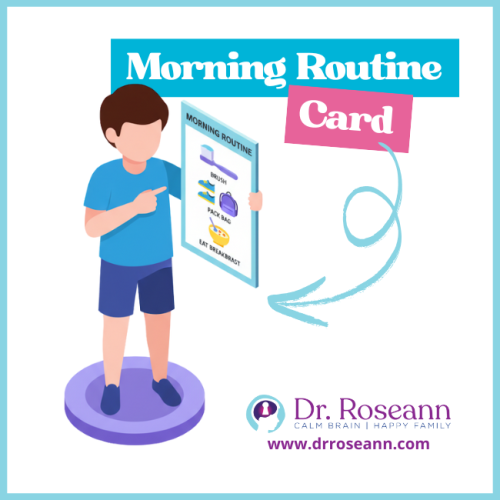
After learning how visual structure can calm a dysregulated brain, she created a simple morning checklist with pictures and added a “two-song timer” to keep things moving. Within a week, the difference was remarkable. Ben began following the steps on his own, singing along to the timer, and showing up at the door with his backpack—calm, ready, and proud.
Takeaway: Predictability reduces panic.
Daily Routines That Make Mornings, Homework and Bedtime Easier
Structure isn’t strict; it’s soothing for ADHD brains. Use visual schedules, chunked steps, and timers to facilitate smooth transitions.
Make It Work
- Visual schedule: pictures for younger kids; simple words for older kids
- Chunk it: “toothpaste → brush → rinse” beats “get ready”
- Timer types: sand timer for younger kids; Time Timer app for older kids
- Predictable rhythms: anchor sleep, meals, movement, and homework
The American Academy of Pediatrics (AAP) emphasizes behavior strategies and parent training as foundational care for young children with ADHD. This aligns with a structure-first approach (Wolraich et al., 2019).
How To Teach Emotional Regulation Without Power Struggles
Big feelings aren’t the enemy—overwhelm is. Co-regulation is your superpower.
Try this:
- Name + validate: “You’re frustrated because math is hard right now.”
- Breathing games: “Smell the pizza, blow out the candles.”
- Calm corner: not a punishment—soft textures, fidgets, picture books
- Your calm = their calm: model slow voice + slow body
What Motivates An ADHD Child (When “Try Harder” Fails)?
Motivation isn’t willpower—it’s wiring. Kids move toward what’s interesting + winnable.
Make Motivation Visible
- Tiny wins: break tasks into micro-steps they can check off
- Body-first: pair tasks with movement (chair push-ups, stand to read)
- Praise effort: “You started without me asking—that is focus!”
- Choose goals that feel doable and meaningful to your child.
Micro-win map (homework example): open folder → find math page → write name → do first two problems.
Pro tip: Use a visual tracker so progress is seen, not just said.
Can Mindfulness Really Help Kids With ADHD Focus and Calm Down?
Yes—when tailored to kids. Mindfulness can reduce reactivity and support attention in children with ADHD. Recent systematic reviews report benefits when practices are developmentally appropriate and brief (e.g., belly breathing, senses reset) (BMC Pediatrics review, 2024).
Kid-Friendly Practices
- One-minute belly breathing with a stuffed animal “belly buddy”
- 5-senses scan: name one thing you see, hear, feel, smell, taste
- Mindful movement: slow “starfish stretch,” wall push, hallway walk
“Mindfulness-based interventions show promise for reducing ADHD symptoms in youth when adapted for families.” —BMC Pediatrics review (2024)
Which Movement, Sleep, and Nutrition Habits Regulate the ADHD Brain?
A tired, wired, or hungry brain can’t learn new skills. Exercise is a regulatory tool, not a reward. Meta-analyses show physical activity improves executive functions and ADHD symptoms in children (Zhang et al., 2020; other meta-analyses echo similar effects).
Daily Regulation Pillars
- Movement snacks: trampoline time, scooter laps, nature walks
- Sleep routine: same wake time; dim lights after dinner; tech off
- Real food: protein at breakfast; color at every meal; hydrate
Parent story (Sam & Noor, age 8):
Noor struggled to stay still during homework, often losing focus within minutes. After Sam built in a 10-minute “dance break,” she came back calmer, happier, and able to focus twice as long.
Takeaway: Move first; focus follows.
How To Build Social Skills Without Shaming Your Child?
Blurting, interrupting, and missing cues aren’t rudeness. They’re reactive wiring in action. Teach skills proactively and debrief gently afterward.
Coach, Don’t Correct
- Role-play tricky moments (waiting turns, asking to play)
- After-action review: “What went well? What could we try next time?”
- Specific praise: “I saw you wait before talking—great self-control.”
How Positive Reinforcement Look Likes in Real Homes
Discipline without support leads to shutdown. ADHD kids rise when they’re seen for what they’re doing right.
Reinforcement That Works
- Catch the micro-win: “You came when I called the first”
- Clear routines + boundaries (posted where kids can see)
- Rewards that teach: swap “sugar prizes” for time with you, Lego minutes, playground choice
“For preschoolers, parent training in behavior management is first-line treatment.” —AAP Clinical Practice Guideline (2019)
How do we handle anger, frustration, and meltdowns in the moment?
Explosions are the nervous system in overdrive. Your plan: safety → soothe → skill.
Meltdown Plan
- Safety: clear space; say, “You’re safe. I’m with you.”
- Soothe: slow breath, squeeze ball, wall push, weighted lap pad
- Skill (after): “When mad next time, do 10 wall pushes—then talk.”
Parent story (Edward, teen): Neurofeedback + a simple “pause-breathe-plan”. These helped Edward catch frustration earlier, build self-awareness, and regain control.
Takeaway: Self-awareness can be trained, and brains can change.
How to Grow Your Child’s Self-Esteem and Strength-Based Identity
ADHD kids hear too often what’s “wrong.” Let’s flip the script.
Strength Switch
- Talk about ADHD as a difference, not a flaw
- Spot strengths daily: creativity, humor, leadership, problem-solving
- Celebrate effort over outcome; build grit with manageable challenges
Say this: “I love how you kept trying, even when it was hard. That’s real strength.”
Calm Today, Confidence Tomorrow
When we calm the brain first, everything else follows. Focus sharpens, emotions settle, and your child feels safer in their own skin.
Don’t try to do all 10 skills at once; start small. One routine, one mindful breath, or one movement break can begin to shift your child’s nervous system toward calm.
Over time, those tiny steps add up. Your child’s coping toolbox grows, and their confidence expands. Family life starts to feel lighter.
Your next step: Grab the Natural ADHD Focus Formula Kit. Remember, it only takes one small win at a time to build lasting change.
FAQs
How fast will we see changes after learning coping skills?
Small wins can show up in days (better mornings); deeper regulation builds over weeks with consistency.
Do we need a formal diagnosis to start?
No. Start with routines, co-regulation, and movement. An evaluation helps tailor support, but skills help regardless.
What if my child refuses coping tools?
Offer choices (“wall push or squeeze ball?”). Keep practices short and try them during calm times first.
Can we combine skills with medication or therapy?
Absolutely. Skills + brain-based supports + school collaboration = best outcomes. Follow your clinician’s guidance.
Citations
Wolraich, M. L., Hagan, J. F., Allan, C., Chan, E., Davison, D., Earls, M., Evans, S. W., Flinn, S. K., Froehlich, T., Frost, J., Holbrook, J. R., Lehmann, C. U., Lessin, H. R., Okechukwu, K., Pierce, K. L., Winner, J. D., & Zurhellen, W. (2019). Clinical practice guideline for the diagnosis, evaluation, and treatment of attention-deficit/hyperactivity disorder in children and adolescents. Pediatrics, 144(4), e20192528. https://doi.org/10.1542/peds.2019-2528
Zhang, M., Liu, Z., Ma, H., & Smith, D. M. (2020). Chronic physical activity for attention-deficit/hyperactivity disorder and/or autism spectrum disorder in children: A meta-analysis of randomized controlled trials. Frontiers in Behavioral Neuroscience, 14, 564886. https://doi.org/10.3389/fnbeh.2020.564886
BMC Pediatrics. (2024). Assessing the impact of mindfulness programs on ADHD symptoms in children and adolescents: A systematic review. BMC Pediatrics, 24(1), 53. https://doi.org/10.1186/s12887-024-05310-z
Always remember… “Calm Brain, Happy Family™”
Disclaimer: This article is not intended to give health advice, and it is recommended to consult with a physician before beginning any new wellness regimen. The effectiveness of diagnosis and treatment varies by patient and condition. Dr. Roseann Capanna-Hodge, LLC, does not guarantee specific results.
Are you looking for SOLUTIONS for your struggling child or teen?
Dr. Roseann and her team are all about science-backed solutions, so you are in the right place!
©Roseann Capanna-Hodge